 Valve/YouTube
The year 2025 was a good year for gadgets. Some of the coolest gadgets released in 2025 include the Nintendo Switch 2 and the first third-party SteamOS handheld. Having said that, it's hard to get excited these days about new tech. So much of the focus is on extra NPUs for AI features you don't want, and prices for things like NAND flash memory are at all-time highs. Is 2026 going to be a bleaker, uninspired year for the tech industry? Maybe not, at least for some of the gadgets we've got our eyes on.
Rather than speculate endlessly about gadgets that might come out in 2026 with only thin rumors to substantiate them, we're looking for more cold, hard release dates. Release dates that have either been confirmed by their manufacturers, or at least have strong insider rumors to support a 2026 release window. These five devices should be coming out in 2026, and we'd argue they're some of the most heavily anticipated out there.
The Steam Machine (and Steam Controller)
 Valve/YouTube
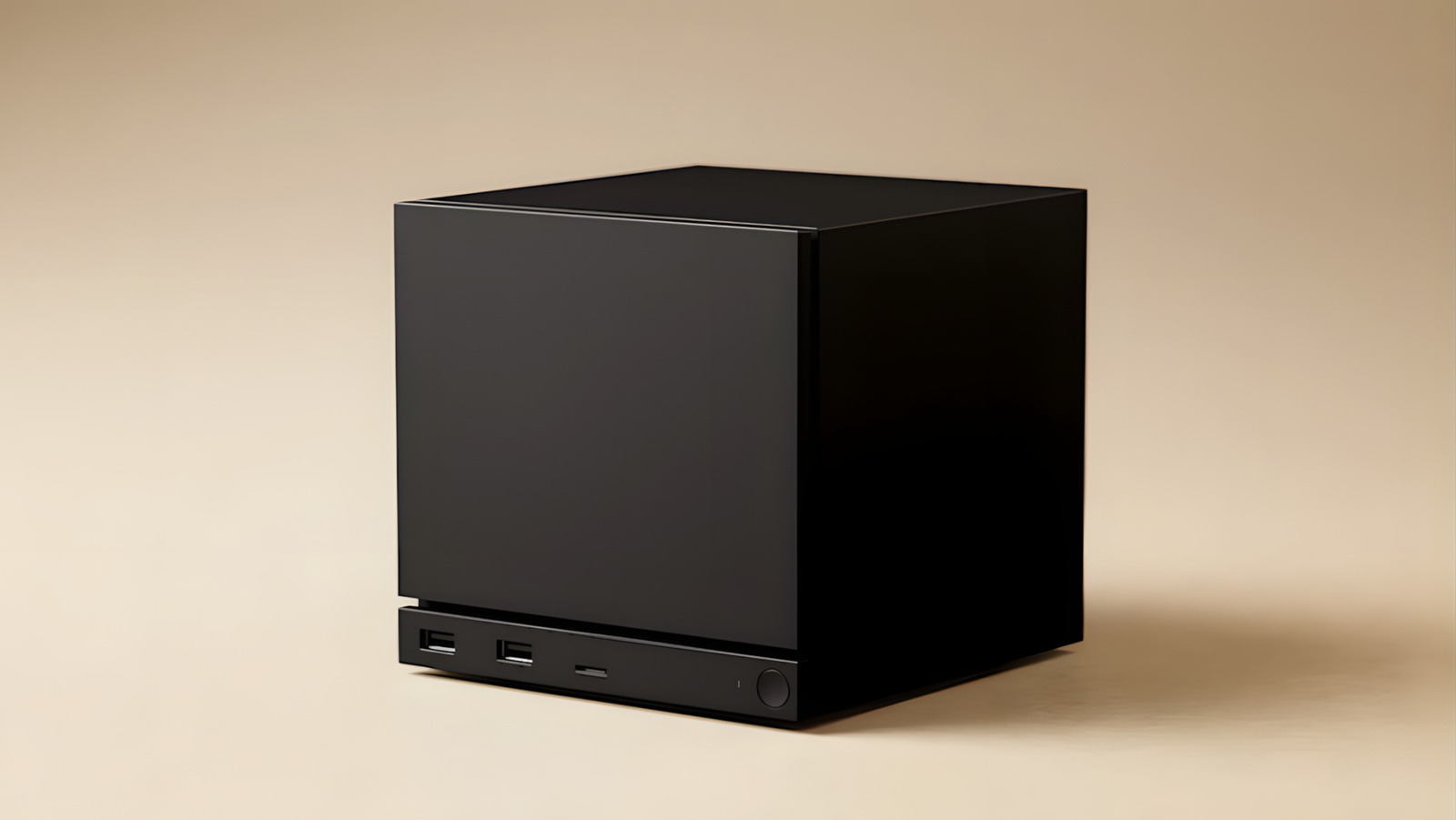
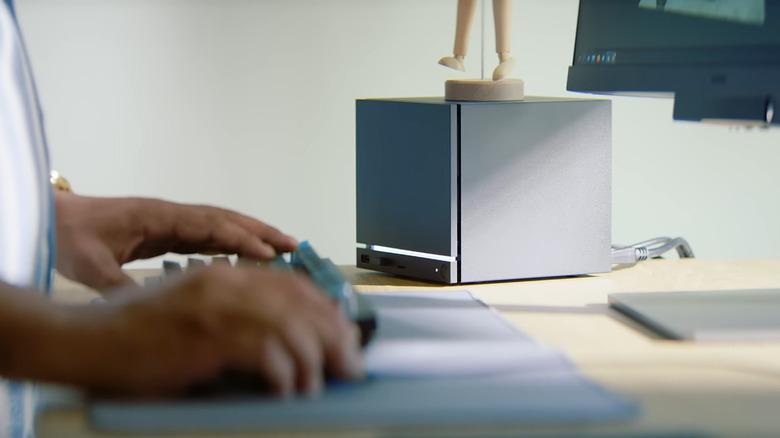
For many, Valve is one of the few tech companies that really seem to care about its customers, so when it releases things, the internet goes nuts. The Steam Machine is coming in the first quarter of 2026, a roughly cube-shaped device (cough, GabeCube, cough) running SteamOS rather than Windows. The device claims to be able to run modern AAA games at 4K and 60fps — provided you're okay with using FSR upscaling — and will ship with 512GB and 2TB models. The incredibly tiny form factor permits it to work under your living room TV as a console, or under your desk as a computer. It's designed to work seamlessly with the brand new Steam Controller and makes up just one part of the new and improved Steam hardware ecosystem alongside the Steam Deck OLED.
Valve's previous Steam Machines flopped hard back in the 2010s, but everything about this new iteration looks incredibly promising ... except for a few wrinkles. First, the price. Valve hasn't announced pricing, though it's left everyone debating furiously after hinting it'll be priced like a PC, not like a console. That means likely a $600 minimum, up to $800, possibly even more. Keep in mind, this price doesn't include a controller.
The second issue is how powerful it is compared to consoles. YouTuber The Phawx replicated the Steam Machine's specs to test the 4K 60fps claim, and the results are concerning. Many recent AAA titles struggle to approach that 60fps territory and often require blurry, ugly-looking performance upscaling. Alas, this is all speculation. Hopefully the Steam Machine strikes a good price point and has well-optimized drivers with FSR 4 frame generation and upscaling. If so, it could be one of the greatest ways to play games ever.
The Steam Frame
 Valve/YouTube
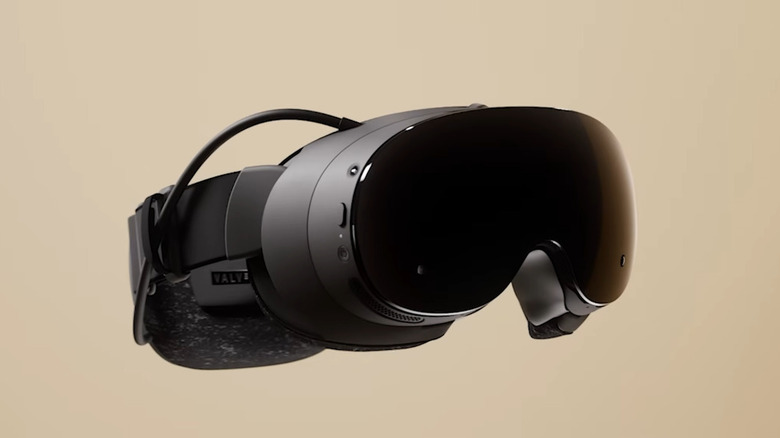
Speaking of the Steam Machine and Steam Controller, Valve announced a third device, its next-generation Steam Frame VR headset. The tech industry seemingly bet on the wrong horse with the whole VR thing, until Valve showed up. When Valve has done VR, it's innovated the medium; the one VR game it released — Half-Life: Alyx — is arguably the best VR title ever made. The Steam Frame looks to be the "Half-Life: Alyx" version of a VR headset.
There's a lot of reason to be excited about the Steam Frame. For one, it uses a unique 6GHz wireless adapter to give you wired-like wireless streaming; early testers have confirmed that it works incredibly well, virtually lag-free. Second, it incorporates a new rendering technology called foveated streaming. In layman's terms, this means that the area where your eyes are looking is streamed at full resolution while everything else is streamed at a much lower one, making it extremely efficient and responsive without any perceptible loss in visual fidelity.
Finally, the Steam Frame is running on an ARM64 Snapdragon SoC (like those you might find in a smartphone) and therefore translates games using the FEX translation layer. Ironically, this is exciting not for the Steam Frame, but for the future of PC gaming as a whole. Games are typically developed for x86 architecture — which includes most PCs and consoles — so they can't run on ARM64 devices like Snapdragon X laptops. Many have hypothesized that Valve is about to open the floodgates to ARM64 translation, making PC gaming possible on power-efficient systems like Android and macOS. The day may come very soon when your Samsung Galaxy S25 Ultra could double as a respectable miniature gaming PC.
iPhone Fold
 AppleTrack/YouTube
Foldable phones have quickly gone from science fiction to everyday reality — albeit a really expensive reality. Options like the Samsung Galaxy Z Fold 7 are viable daily drivers that can no longer be easily defeated by a handful of pocket dust and/or a sprinkling of water. As is tradition, Apple is late to the party and has long been rumored to be working on a foldable iPhone. It looks like 2026 is the year we'll see an "iPhone Fold." The following iPhone Fold rumors have been painstakingly gathered by MacRumors from various leakers.
If these rumors are true, then the new iPhone Fold will have a single book-fold design of about 7.8 inches (possibly with a larger, 8.3-inch "iPhone Fold Max" model), akin to the Google Pixel Fold 10 and Galaxy Z Fold 7. This includes an outer 5.5-inch display that can be used when the phone is folded closed, complete with a separate selfie cam. For the main camera system, we may be looking at a two-lens, 48MP array.
It would appear that Apple, in typical Apple fashion, is focusing on thinness — perhaps 4.5mm when unfolded, thinner than the iPad Pro M5 — so this might be a device that only has Touch ID, not Face ID. Further, Apple appears to be aiming aggressively for a creaseless iPhone, something that could be an industry first. There's also a lot of technical work happening in the background — a liquid-metal hinge, for example, the most sci-fi sounding thing ever — to make this phone as thin and premium as possible. You probably aren't shocked to find out that the price will likely exceed $2,000. By all accounts, we should be seeing this folding iPhone in September 2026.
AYN Odin 3
 AYN
AYN
We mentioned with the Steam Frame that Android phones may soon become little gaming PCs. While you could turn your old Android phone into a portable gaming device with an attachable controller, the better solution is to buy a dedicated Android handheld. This is a burgeoning market in recent years, marketed primarily toward game emulation of older systems like the Nintendo 64 and PlayStation. Brands include AYN, Retroid, and Anbernic. One of the most hotly anticipated releases is the AYN Odin 3, slated for January 2026.
Specs-wise, this tiny 6-inch device does not pull any punches. It's got a 120Hz OLED screen, a top-of-the-line 3nm Qualcomm Snapdragon 8 Elite chip, an 8,000 mAh battery, as well as thoughtful nice-to-have features like Hall-effect joysticks and triggers, a microSD card slot, and a headphone jack. Unlike a typical smartphone, Android handhelds have active fan cooling, making them less prone to thermal throttling. Expect to be able to emulate just about anything, including more demanding, later console generations like the PS3. The AYN Odin 3 may also be capable of something no one expected: modern PC gaming.
Using apps like GameHub, the Odin 3 can play AAA titles like "The Witcher 3" at 40fps. Remember, this is a device so small you can literally stick it in your pocket, not a hulking Steam Deck. We don't recommend getting the Odin 3 as a Steam Deck replacement, since actual PC handhelds are going to perform miles better, but these are early days. ARM64 PC game translation is in its infancy on Android, so it's highly likely that future driver support will let the Odin 3 tackle more recent AAA titles. The Odin 3 starts at $329, and you can pre-order it now. Shipping for the device starts mid-January 2026.
Retroid Pocket 6
 Retroid
Admittedly, the AYN Odin 3 is a higher-end enthusiast device, with its most tricked-out model going for $519. Not exactly budget. If the Odin 3 looks too pricey, then you might want to go for the Retroid Pocket 6. Specs aren't as bleeding-edge as the Odin 3, but they're still very, very respectable. The Pocket 6 features a Snapdragon 8 Gen 2 processor, up to 12GB of RAM, a 1080p 5.5-inch AMOLED display, and a 6,000 mAh battery. Mind you, you're still getting those nice-to-haves like Hall-effect sticks and fast Wi-Fi 7 and Bluetooth 5.3 connectivity. All of this will run you $229 if you choose the cheapest 8GB RAM model. The 12GB RAM version tops out at $279, considerably less than even the entry-level Odin 3.
Don't assume that because this has a weaker chip the performance won't be worth writing home about. On the previous generation Retroid Pocket G2, you can get around 75fps in "Skyrim" and about 60fps in "Tomb Raider." The even weaker Retroid Pocket 5 managed about 20fps in "GTA 5," so it's safe to bet that the Retroid Pocket 6 will probably hold up with older AAA titles. Game emulation and indie titles should likewise work beautifully.
There are a few more benefits to choosing the Retroid Pocket 6 aside from affordability. For one, you can choose whether you want the D-pad (the arrow buttons) to be on the top or on the bottom; some prefer offset thumbsticks because it feels more natural. Driver support is also more robust; a big issue with the Odin 3's newer 8 Elite chipset is that due to poor driver support, many games run poorly or don't run at all. Shipping for the Retroid Pocket 6 begins in January 2026.