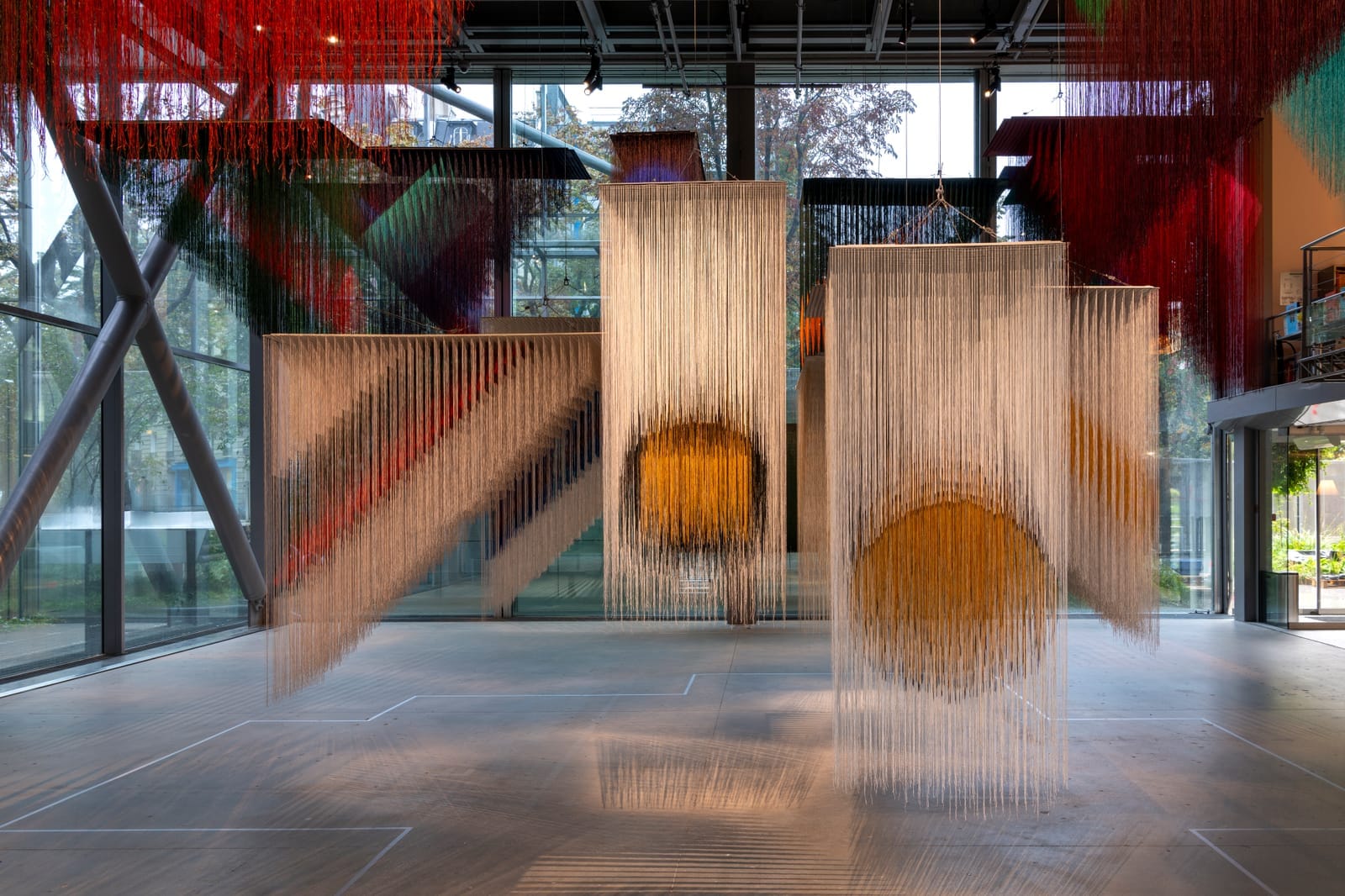
Olga de Amaral’s sculptural tapestries, Otobong Nkanga’s multi-media oeuvre, Meriem Bennani’s footwear-as-soundscape, and more.
 Eurídice Arratia
December 10, 2025
— 8 min read
Eurídice Arratia
December 10, 2025
— 8 min read
 Installation view of Olga de Amaral at Fondation Cartier (photo by Marc Domage, courtesy Fondation Cartier)
There hasn’t been a dull moment in the Parisian art world in 2025. It has been a year of museum blockbusters and historical rediscoveries, of jaw-dropping exhibitions at private foundations and impressive shows by younger voices across the city’s nonprofit spaces. The landscape of how we experience contemporary art is also shifting: This past September, the Centre Pompidou closed its iconic Beaubourg building for a long-term renovation after a season of memorable exhibitions, while the Fondation Cartier left Boulevard Raspail for a sprawling new site just steps from the Louvre. All of this attests to a thriving, always-in-flux ecosystem that makes Paris one of the most vital and dynamic places to see art today.
Énormément Bizarre
Centre Pompidou, March 26–June 30 Organized by the institution
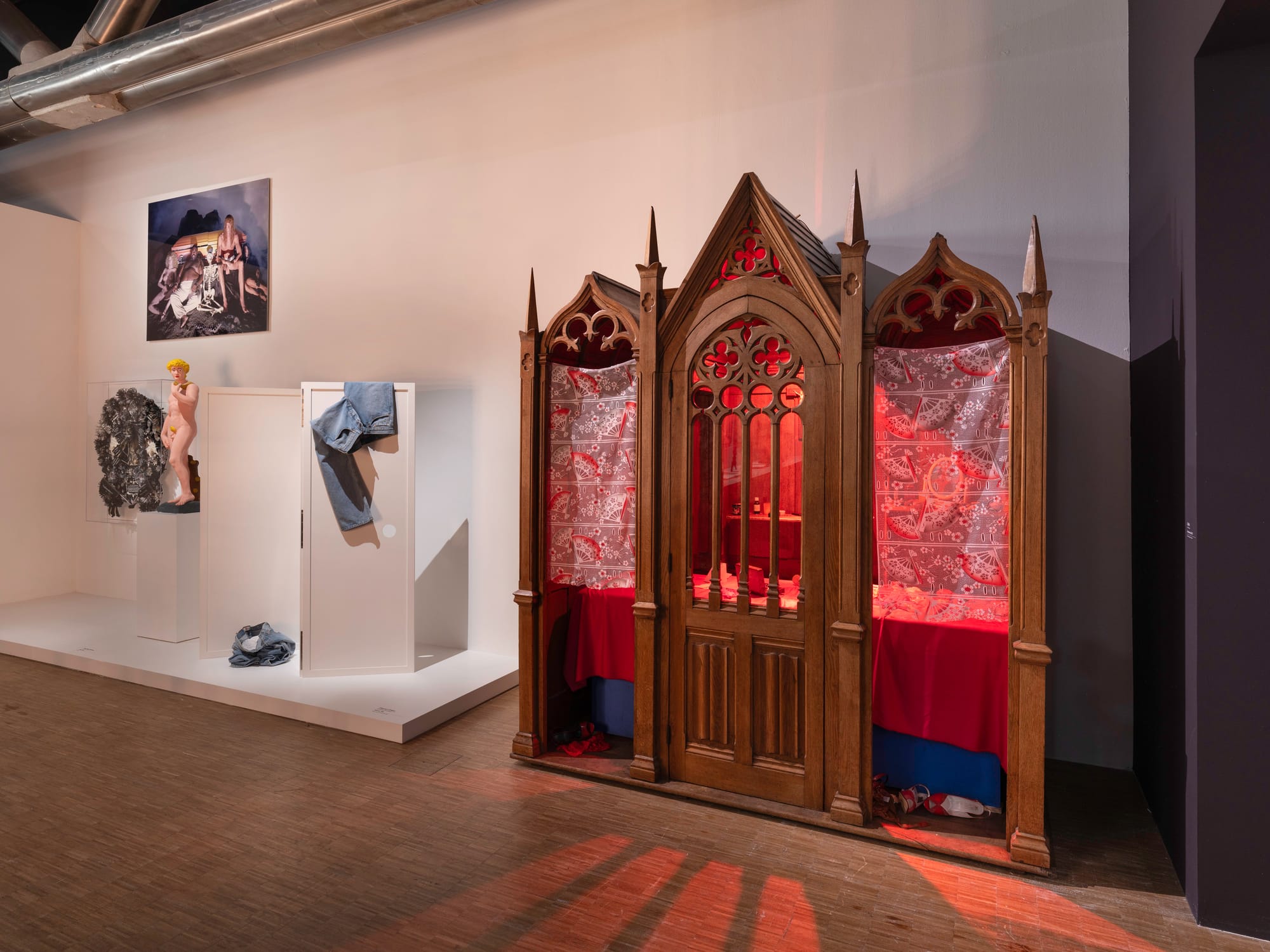 Installation view of Énormément Bizarre (photo courtesy Centre Pompidou)
Walking into Énormément Bizarre was like stepping into the delirious mind of a brilliant hoarder. Artist Wim Delvoye uttered the titular words — “extremely bizarre” — when he encountered the astonishing universe Jean Chatelus (1939–2021) began assembling in his Parisian apartment starting in the 1960s. In this exhibition, nearly 400 works — sculptures, installations, paintings, photographs, drawings, vernacular objects and religious artifacts — capture the non-hierarchical, chaotic atmosphere of Chatelus’s apartment. It unfolds as a dense cartography of the collector’s obsessions: ruins, the macabre, apocalypse, and more — an accumulation that unsettles conventional notions of taste and institutional decorum.
Paris Noir: Artistic Circulations and Anti-Colonial Resistance, 1950-2000
Centre Pompidou, March 19–June 30 Curated by Alicia Knock with Eva Barois De Caevel, Aurélien Bernard, Laure Chauvelot, and Marie Siguier
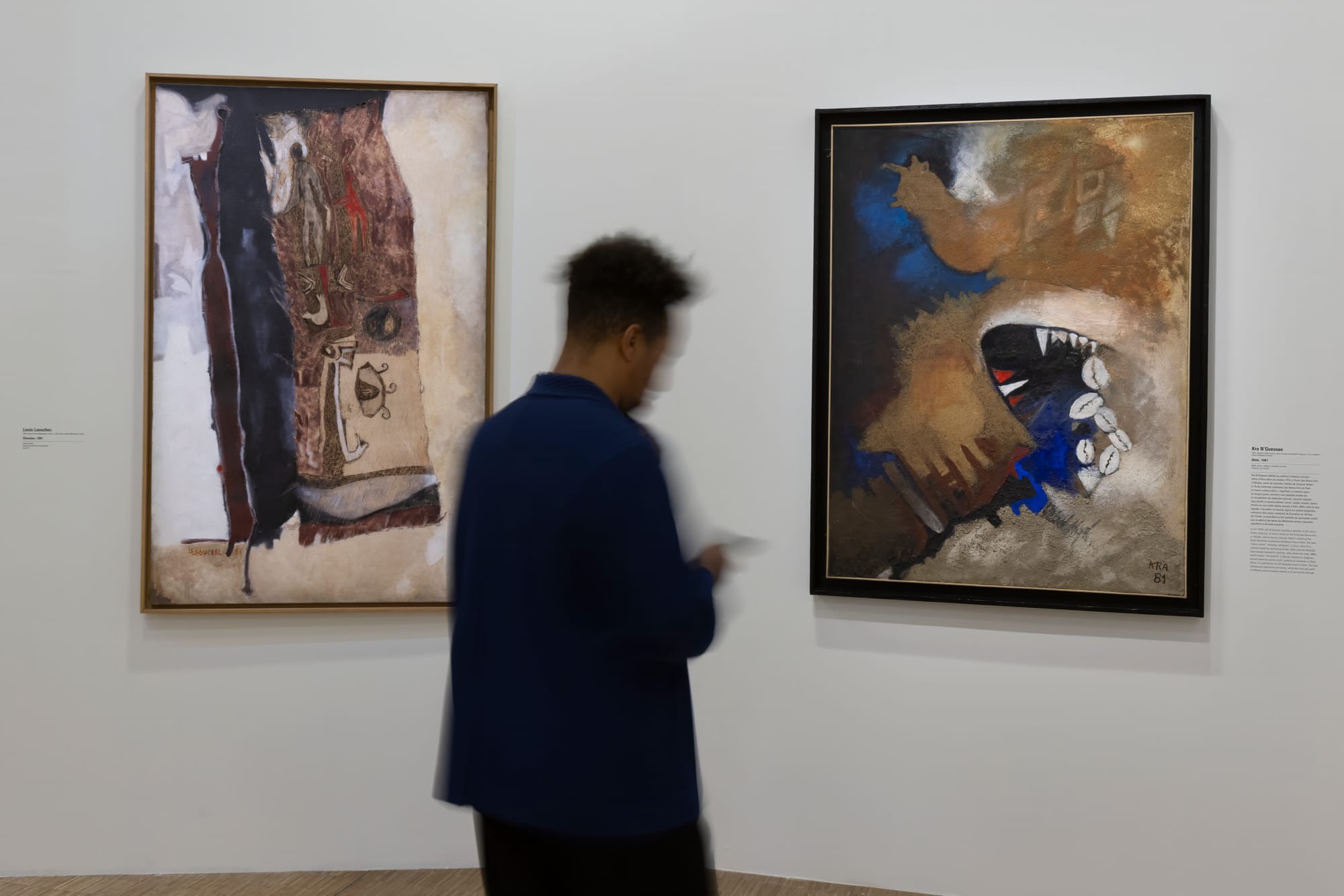 Installation view of Paris Noir: Artistic Circulations and Anti-Colonial Resistance, 1950-2000 (© Hervé Véronèse; photo courtesy Centre Pompidou)
After the Second World War, Paris became both a refuge and a fertile cultural hub for Black intellectuals and artists. The ambitious exhibition Paris Noir gathered 150 artists from across the Caribbean, Africa, and the Americas who have seldom shown their work in France. It reveals Paris as a productive incubator for Pan-Africanism and anti-colonialism, and foregrounds these artists’ significant contributions to rewriting modernism and beyond. It is a story of transatlantic solidarities, of hybridization that transcends ethnicity and nationality, and a Black diasporic aesthetic.
David Hockney 25
Fondation Louis Vuitton, April 9–September 1Curated by Suzanne Pagé, Norman Rosenthal, and François Michaud with Magdalena Gemra
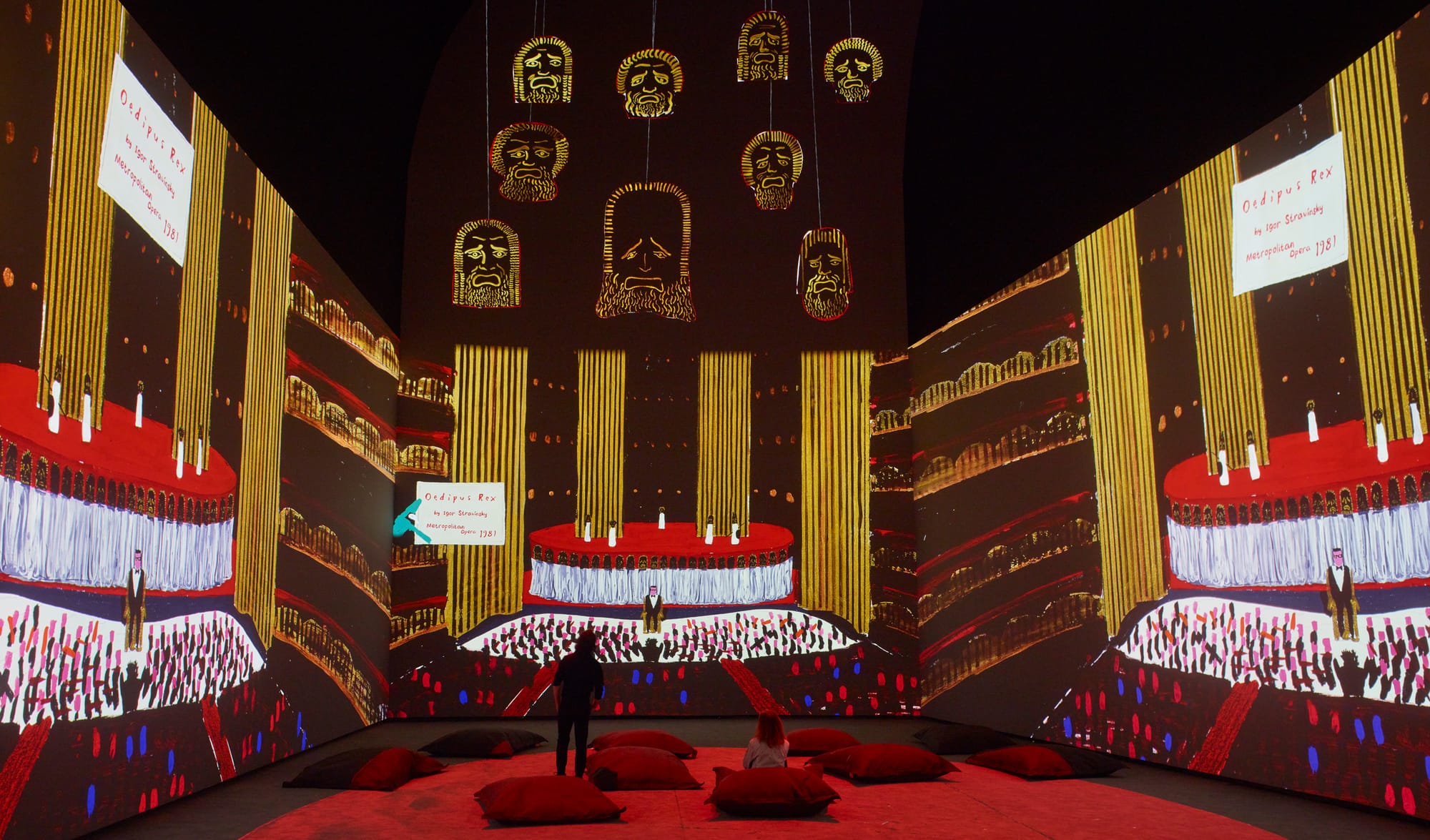 Installation view of David Hockney 25 at Fondation Louis Vuitton (© David Hockney © Fondation Louis Vuitton / Marc Domage; photo courtesy Fondation Louis Vuitton)
Visiting this exhibition at the Fondation Louis Vuitton — the largest show of David Hockney to date — was an ecstatic experience. Though it focused on the past 25 years of the artist’s practice, it included emblematic paintings such as "A Bigger Splash" (1967) and “Mr and Mrs Clark and Percy” (1971). Moving through each room — walls painted in vibrant blue, red, and yellow — I became further and further immersed in Hockney’s joyful and prolific universe. There were paintings, drawings, and polaroids, as well as portraits, landscapes, works on digital devices, and immersive multimedia installations. I was left in awe not only of his prodigious output but also of his fearless curiosity and deep engagement with the world.
Tarik Kiswanson: The Relief
Institut suédois, October 23, 2025–January 11, 2026Curated by Sara Arrhenius
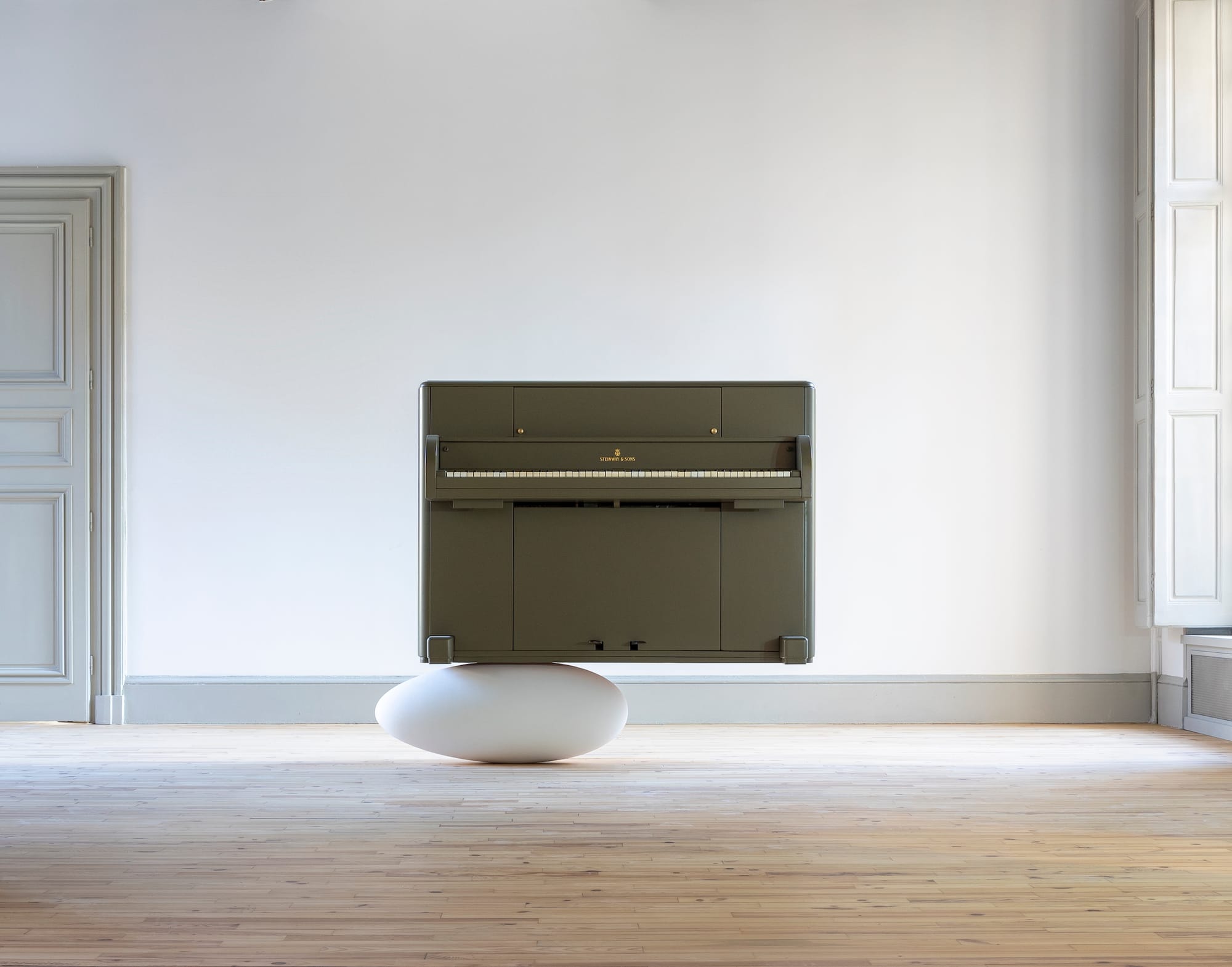 Tarik Kiswanson, "The Relief (Steinway Victory Vertical, 1944)" (2025) (photo by Edward Greiner, courtesy the artist and Sfeir-Semler Gallery)
I was lured into Tarik Kiswanson's exhibition The Relief by the tentative sound of Beethoven’s “Ode to Joy,” and encountered “Steinway Victory Vertical” (1944), a piano that had been parachuted to World War II soldiers for psychological solace, precariously hovering above an egg-like sculpture. The rest of the exhibition only extended the spell, including a video of Saint-Denis Conservatory students hesitantly playing Beethoven’s melody and a pristine white structure with furniture tucked within, suspended midair. The Swedish-born artist of Palestinian descent blurs the line between art and architecture while quietly summoning histories (sometimes biographical) of loss, displacement, and renewal.
Meriem Bennani: Sole Crushing
Lafayette Anticipations, October 22, 2025–February 8, 2026Curated by Elsa Coustou
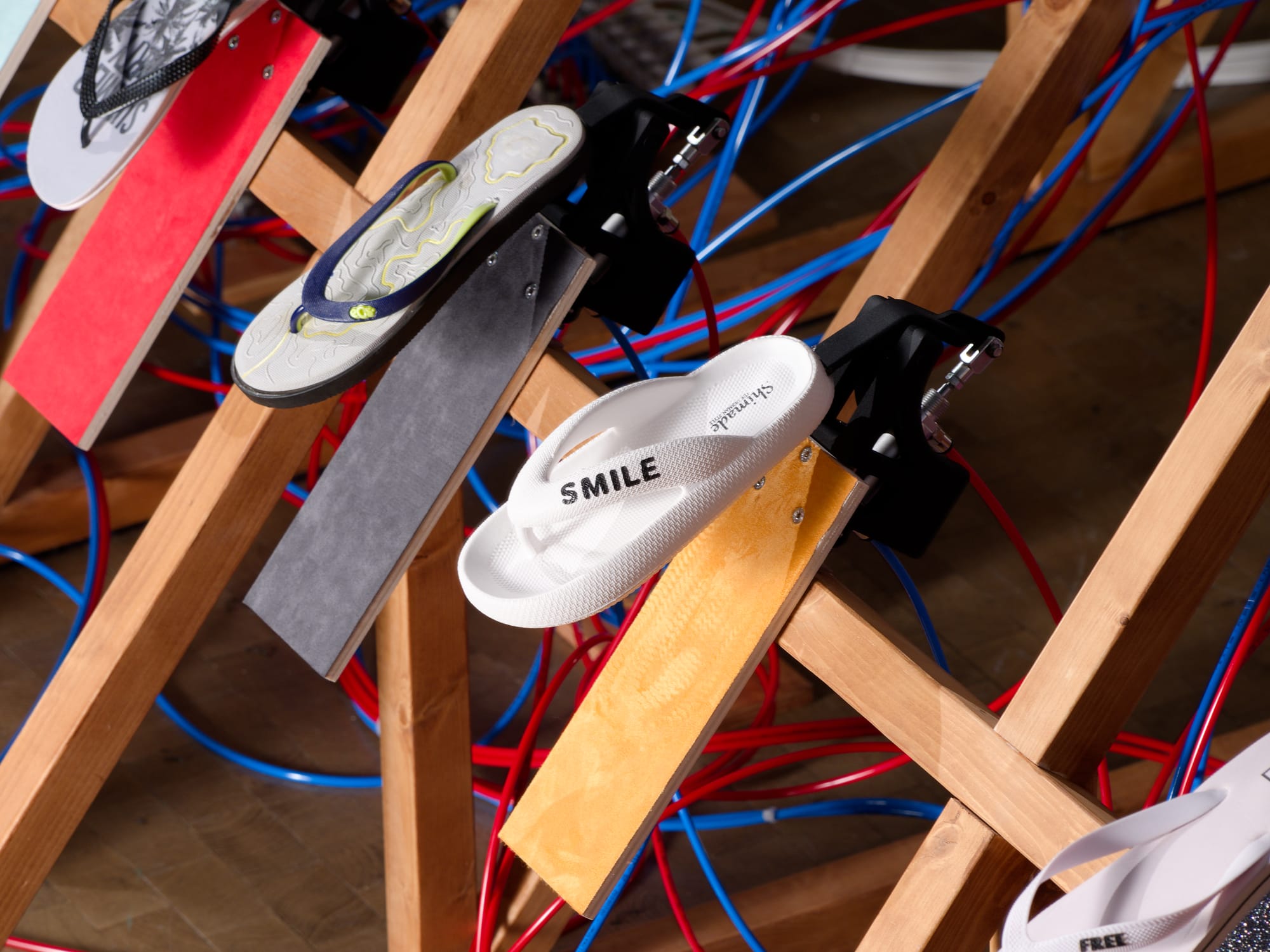 Installation view of Meriem Bennani: Sole Crushing (photo by Aurelien Mole, courtesy Lafayette Anticipations)
 Meriem Bennani’s installation Sole Crushing at Lafayette Anticipations is an exhilarating crowd-pleaser that fills the whole building with the restless beat of over 200 mechanized flip-flops — a hypnotic collective organism set to an original score that fuses electronic beats with North African rhythms. Sounding at times like a chorus, at other times like solo voices, these flip-flops immerse the visitor in the energy of a soaring crowd — sometimes jubilant, sometimes charged with the urgency of protest.
Niki de Saint Phalle, Jean Tinguely, Pontus Hulten
Grand Palais, June 26, 2025–January 4, 2026Co-organized by the Grand Palais and Centre Pompidou, curated by Sophie Duplaix
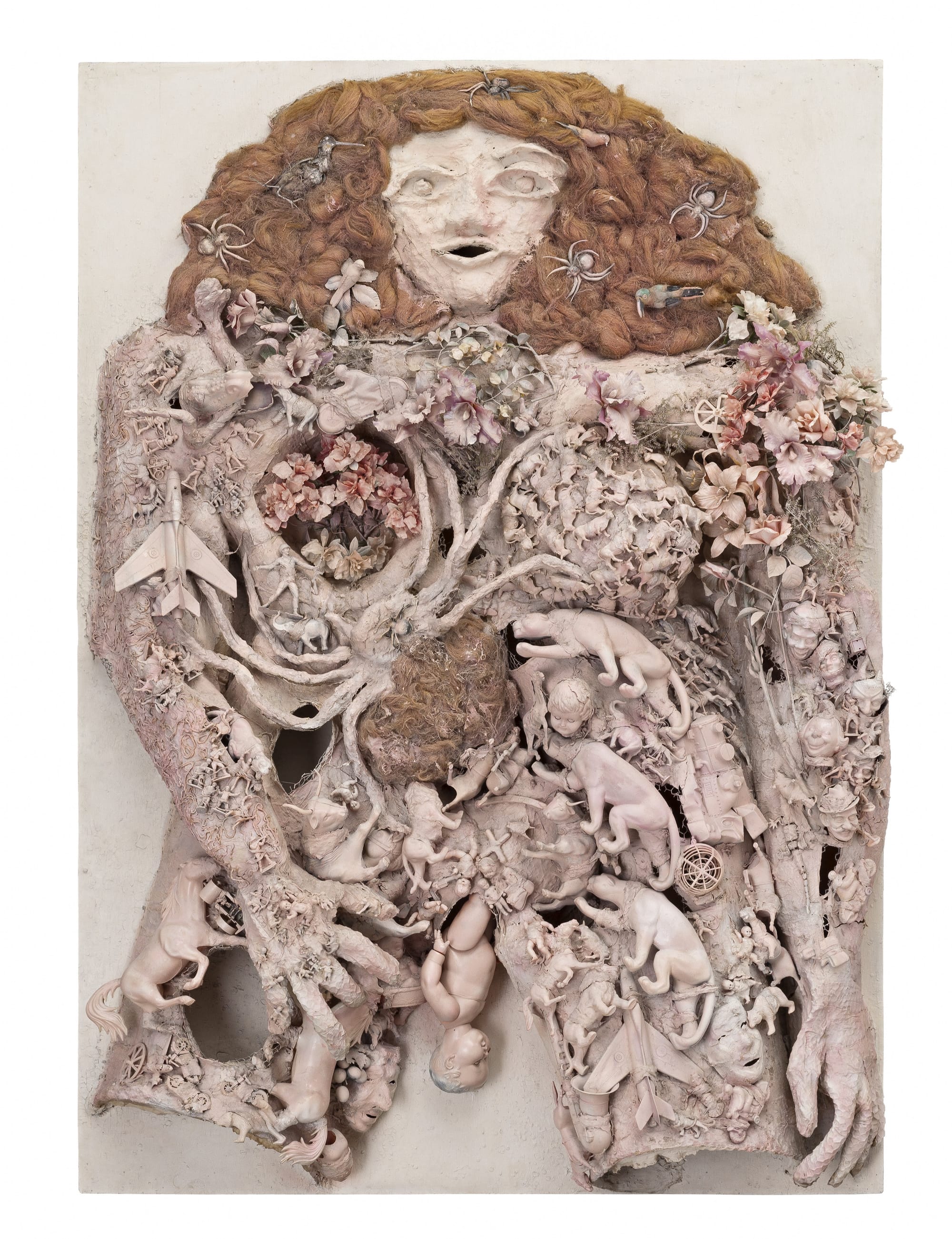 Niki de Saint Phalle, "L’Accouchement rose" (1964), plaster, paint, various objects, textile fibers and wire mesh on a wooden panel (photo courtesy the Grand Palais)
Pontus Hultén, the visionary curator and inaugural director of the Musée national d’art moderne (part of the Centre Pompidou) in the late 1970s to early ’80s, is a large reason you and I recognize the names Niki de Saint Phalle and Jean Tinguely. This engrossing exhibition traces the prolific collaboration between these three figures, reconstructing their shared world and anarchistic spirit through letters, rare films, and a wealth of archival material. Iconic works — including Tinguely’s kinetic machines and Saint Phalle’s "shooting paintings" from the 1960s — anchor a narrative that reveals the radical imagination, humor, and experimental spirit that shaped one of the most influential artistic collaborations of the 20th century.
Otobong Nkanga: I dreamt of you in colours
Musée d’Art Moderne de Paris, October 10, 2025–February 22, 2026Organized by the artist in collaboration with the Musée Cantonal des Beaux-Arts in Lausanne; Paris iteration curated by Odile Burluraux and Lausanne iteration curated by Nicole Schweizer
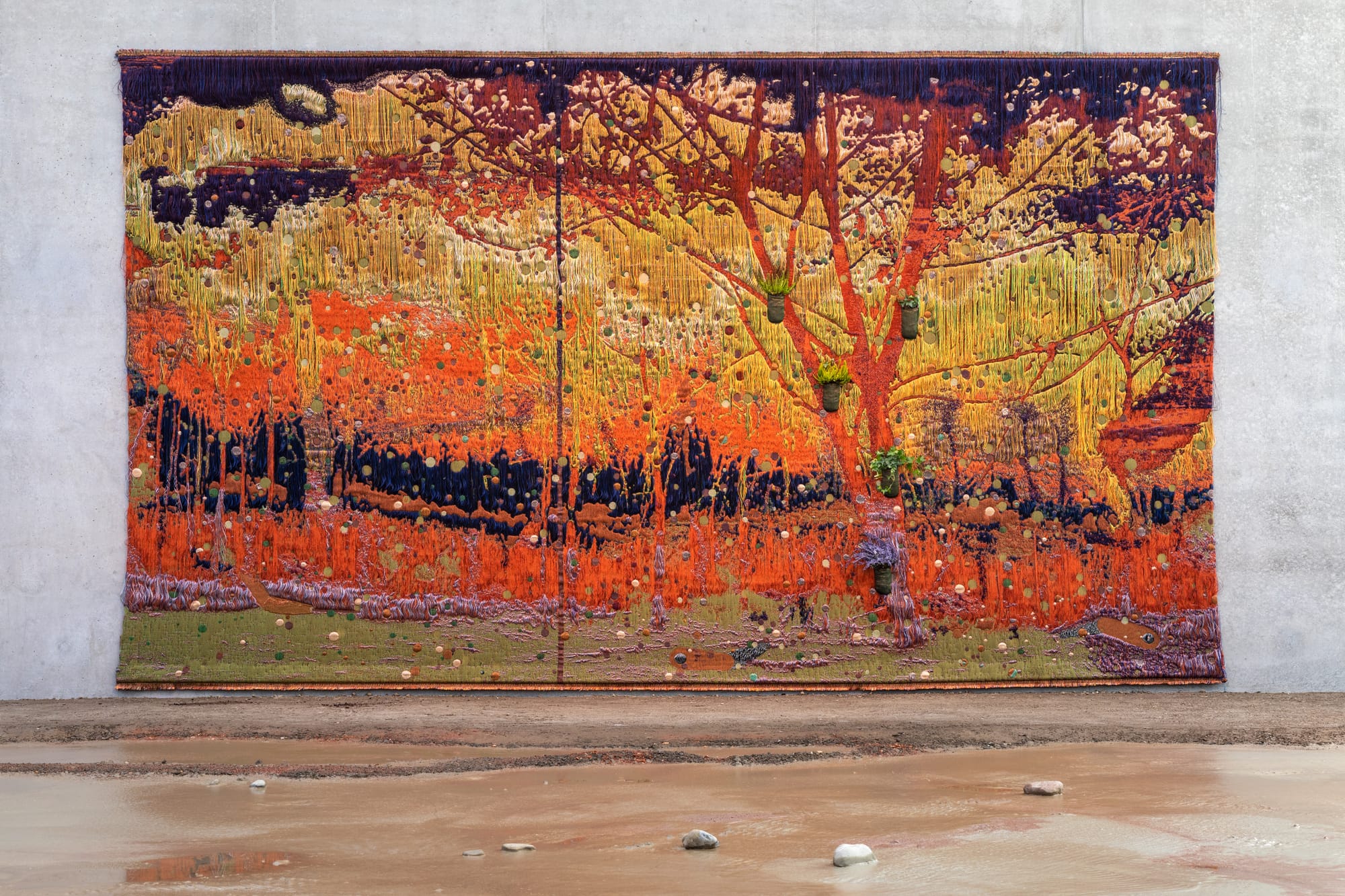 Otobong Nkanga, "Unearthed - Sunlight" (2021), textile (photo by Markus Tretter, Kunsthaus Bregenz; courtesy the artist)
An expansive exhibition at the Musée d’Art Moderne covers the full two-decade career of Nigerian artist and this year’s Nasher Prize winner, Otobong Nkanga. Her boundary-breaking oeuvre includes photographs, drawings, ceramics, and site-specific installations that include a wide range of materials, including sand, glass beads, wood, braided ropes, and soap. Also on view are a series of sumptuous large-scale tapestries that chart the devastating legacies of colonization and the intricate, often fragile ties between people, the land, and its resources. Taken together, the exhibition addresses questions of consumption, global circulation, interconnectedness, and care.
Jacques-Louis David
Louvre Museum, October 15, 2025–January 26, 2026Curated by Sébastien Allard and Côme Fabre with Anne Gobet
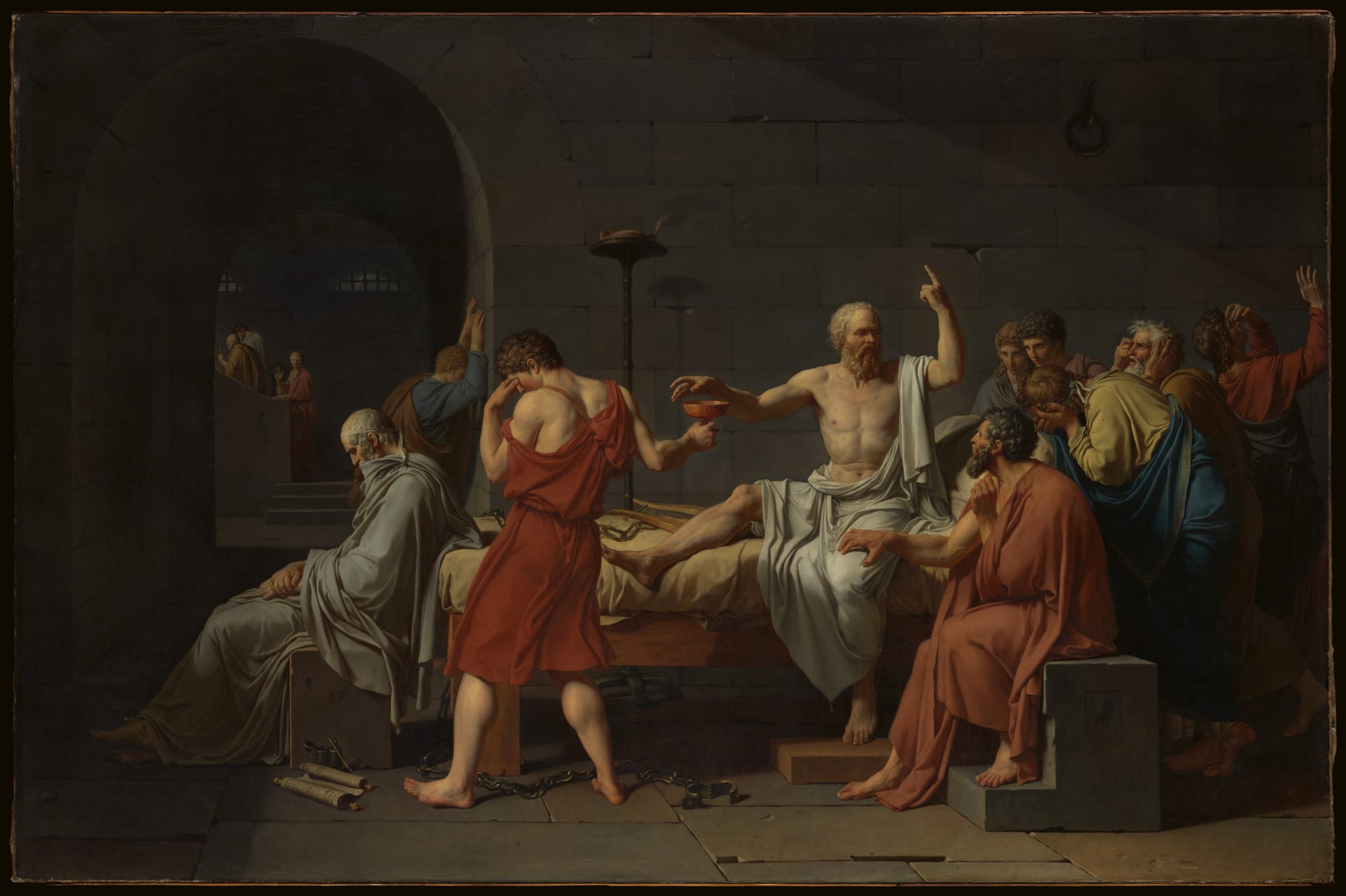 Jacques-Louis David, "The Death of Socrates" (1787), oil on canvas (©The Metropolitan Museum of Art, New York, photo courtesy the Louvre Museum)
Marking the bicentennial of David’s death, this momentous, once-in-a-generation retrospective at the Louvre was one that only this museum could realize. Pairing its unmatched holdings — from "Oath of the Horatii” (1784–85) to "The Coronation of Napoleon” (1807) — with rare loans like "The Death of Marat” (1793) from Brussels, the show reveals a wily, uncompromising artist whose neoclassical rigor met fierce political ambition. Or, in the words of curator Sébastien Allard, “the defender of an ideal of beauty in the service of a political project.” The exhibition confronts, head-on, the persuasive power of images: how they shape the world and whether propaganda can also be great art.
Read Olivia McEwan's review
MinimalLygia Pape: Weaving Space
Fondation Pinault, October 8, 2025–January 19, 2026Minimal curated by Jessica MorganLygia Pape: Weaving Space curated by Emma Lavigne with Alexandra Bordes
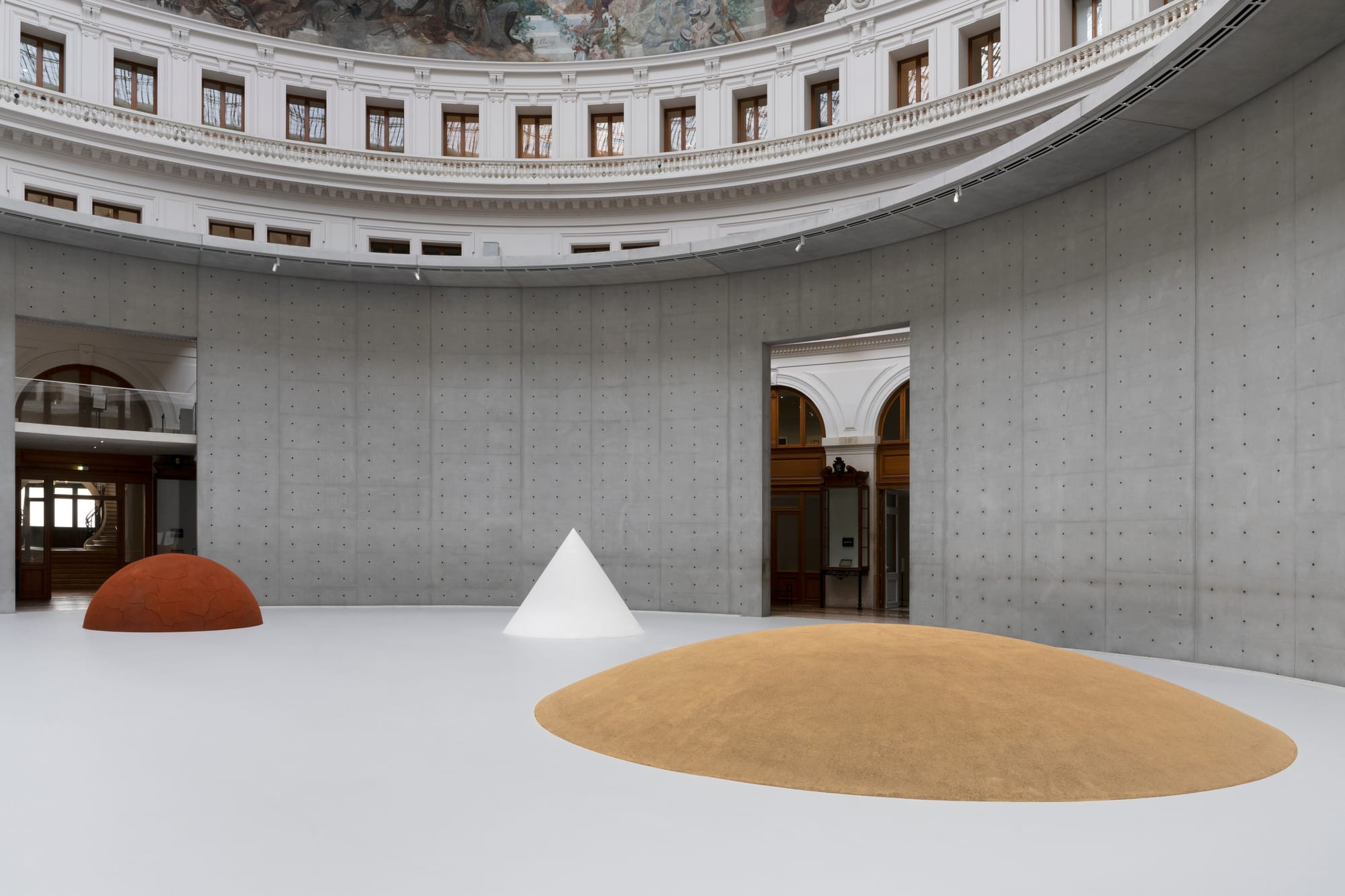 Installation view of Minimal (photo courtesy Fondation Pinault)
“Minimal” and “sensual” are two words one wouldn’t ordinarily associate with each other, yet they felt like a perfect pair when I wandered through the spectacular rotunda of La Bourse, immersing myself in Meg Webster’s sensory-rich sculptural works made of local soil, beeswax, salt, sticks, and clay. Drawing from movements ranging from Japanese Mono-ha and Brazilian Neo-Concretism to Italian Arte Povera and American Minimalism, this exhibition foregrounds how these geographically distant tendencies were bound by a shared impulse: to rethink the ties between artwork, viewer, and environment. This show felt particularly important in its ambition to expand Minimalism beyond the United States.
 Installation view of Lygia Pape: Weaving Space (photo courtesy Fondation Pinault)
Billed as a “prelude” to the Minimal show, Lygia Pape: Weaving Space, the great Brazilian pioneer’s first solo exhibition in France, was a compressed burst of some of Pape’s most emblematic works, showcasing the breadth of her experimental practice across media. The exhibition included works from the dazzling “Ttéia 1, C” (2001–7) — in which hundreds of spotlit copper wires stretch across a pitch-dark room — to a reenactment of the performance “Divisor” (1968) that brought more than 100 participants into the streets of Paris.
Read the review
Olga de Amaral
Fondation Cartier, October 11, 2024–March 15, 2025Curated by Marie Perennès
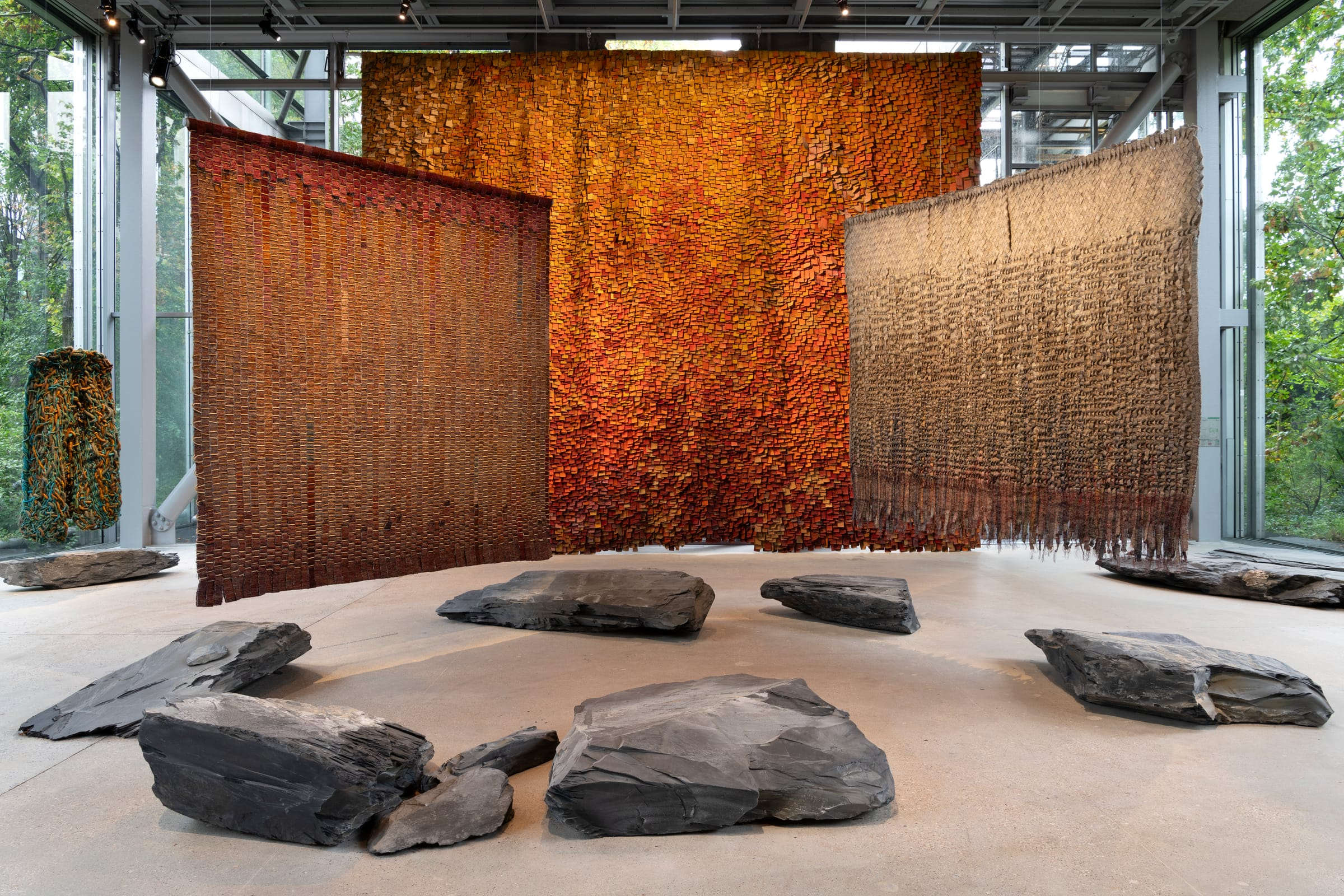 Installation view of Olga de Amaral at Fondation Cartier (photo by Marc Domage, courtesy Fondation Cartier)
As I wandered into the wondrous forest of Olga de Amaral at the Fondation Cartier, I couldn’t help but feel a pang of sadness: The Colombian artist’s retrospective marked the final exhibition in its iconic glassy haven before the foundation moved to its new home across from the Louvre. The stunning show mapped how, since the 1960s, de Amaral has expanded the possibilities of textile art, working with linen, cotton, horsehair, gesso, and precious metals. Blending modernist ideas with Latin-American and pre-Columbian craft traditions, she transforms tapestry into sculptural forms that engage light, texture, and space. The exhibition reaffirmed why any art historical understanding of textile art must run through her pioneering, ever-evolving practice.